34ºc, Sunny

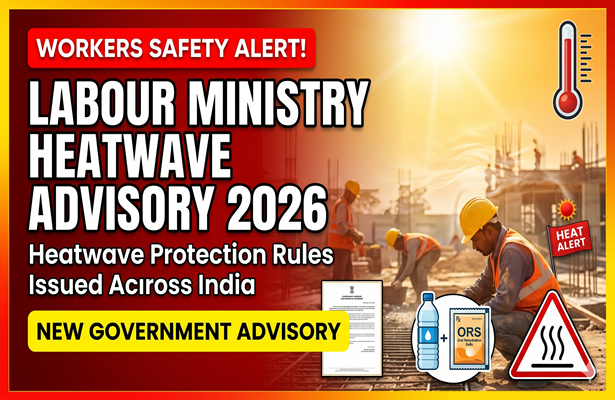
As temperatures continue to rise across India, the Ministry of Labour and Employment has taken an important step to protect workers and labourers from the harmful effects of extreme heat and heatwaves. On 28 April 2026, the ministry issued a nationwide advisory to all States, Union Territories, and affiliated organizations, urging them to take immediate preventive and relief measures for worker safety.
This advisory is especially important for workers who perform outdoor and labour-intensive jobs such as construction workers, brick kiln workers, factory labourers, mine workers, daily wage earners, and temporary workers. These groups are most vulnerable to heat-related illnesses because they work for long hours under direct sunlight or in high-temperature environments.
The ministry sent official letters to Chief Secretaries and Administrators of all States and Union Territories. In the letter, it emphasized the need for a coordinated and multi-dimensional approach to ensure worker safety during the summer season.
One of the major recommendations is the rescheduling of working hours. Employers have been advised to allow flexible working schedules so that workers can avoid working during the hottest part of the day. This can significantly reduce the risk of heatstroke and dehydration.
Another key instruction is ensuring the availability of adequate drinking water at all workplaces. The ministry has asked employers, contractors, industries, and construction companies to make sure workers have constant access to clean and cool drinking water. Resting areas and workspaces should also be kept cool and shaded to help reduce body heat.
The advisory also recommends the availability of emergency ice packs and heat illness prevention materials, especially at construction sites and other high-risk workplaces. These emergency items can help provide immediate relief in case of heat stress or heatstroke.
Health monitoring is another important part of the advisory. States and employers have been asked to coordinate with health departments to ensure regular health check-ups for workers. Early detection of heat-related stress can prevent serious health emergencies.
Factory and mine management have been advised to slow down work speed during periods of extreme heat. In cases where continuous work is unavoidable, employers should appoint two-person teams so workers can support each other. Adequate rest breaks, proper ventilation, and cooling arrangements must also be ensured.
Special attention has been recommended for construction workers, brick kiln labourers, daily wage workers, and temporary workers, as they often work without proper shelter and are at higher risk during heatwaves.
The ministry has also encouraged States and Union Territories to run awareness campaigns at labour gathering points, public places, and road intersections. Posters and banners with heatwave safety messages and emergency contact details should be displayed so that workers can quickly understand the risks and know what to do during emergencies.
The Directorate of Training under the National Board for Workers Education has been advised to organize awareness and training programs. These programs will focus on causes and effects of heatstroke, safe working practices like drinking enough water and taking rest breaks, early identification of heat stress symptoms, preventive workplace strategies, and emergency first-aid measures.
Hospitals and dispensaries under the Employees’ State Insurance Corporation (ESIC) and the Directorate General of Labour Welfare (DGLW) have been instructed to establish dedicated help desks for heatwave cases. They must also maintain enough stock of ORS, ice packs, and other materials needed to prevent and treat heat-related illnesses.
Enforcement agencies such as the Chief Labour Commissioner (CLC) and the Directorate General of Mines Safety (DGMS) have been asked to monitor compliance with legal safety provisions. This includes checking drinking water facilities, ventilation systems, cooling arrangements, and regular health inspections at workplaces.
Organizations like the Employees’ Provident Fund Organisation (EPFO) and National Career Service (NCS) have also been advised to ensure cool and ventilated spaces and adequate drinking water supply during their camps and awareness activities.
Additionally, all organizations have been asked to submit fortnightly reports regarding the actions taken and activities conducted. This will help the ministry review the situation and ensure proper implementation of the advisory.
The Ministry of Labour and Employment has clearly stated that timely preventive action and strict monitoring are essential to protect workers’ health, safety, and productivity during the summer season. With heatwaves becoming more intense each year, this nationwide advisory is a necessary step to ensure that India’s workforce remains safe and healthy.
This move shows the government’s commitment to worker welfare and highlights the importance of taking heatwave protection seriously across all sectors.