34ºc, Sunny

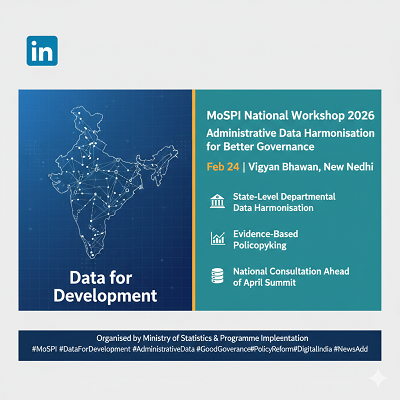
New Delhi | February 21, 2026: The Ministry of Statistics and Programme Implementation (MoSPI) will organize a national-level consultative workshop on February 24, 2026, at Vigyan Bhawan, New Delhi.
The theme of the workshop is “Use of Administrative Data for Governance: Harmonisation of Departmental Data at the State Level.”
Part of ‘Data for Development’ National Summit Preparation
The consultative workshop forms part of the preparatory process for the upcoming national summit on “Data for Development”, scheduled for April 2026.
The initiative follows up on the 5th National Conference of Chief Secretaries of States and Union Territories held in December 2025, where strengthening administrative data systems was identified as a key reform priority.
Focus on Strengthening Administrative Data Systems
The primary objective of the workshop is to advance a structured national agenda aimed at:
-
Strengthening administrative data systems
-
Promoting responsible data harmonisation across departments
-
Enhancing coordination between State and Union Territory governments
-
Improving data-driven governance
The consultation will sensitize states and UTs about the objectives, scope, and key issues for discussion in their upcoming state-level internal workshops.
Participation from Multiple Stakeholders
The workshop will witness participation from:
-
State and Union Territory Planning Departments
-
IT Departments
-
Central Ministries and Departments
-
International agencies
-
Industry representatives
-
Think tanks
-
Academic institutions
Experts will deliberate on various aspects of administrative data harmonisation and share successful case studies of data-driven governance models.
Toward Evidence-Based Policy Making
Inputs gathered from state-level consultations will be discussed during the April 2026 national summit to identify priority reform areas in administrative data management.
The initiative reflects the government’s commitment to strengthening evidence-based policy making, ensuring better inter-departmental coordination, and enhancing governance outcomes through structured data systems.